Cerveceria Pulpo
Self-initiated process of creating a concept for a restaurant, that could be sustainable and survive in the dense restaurant scene in Copenhagen.
I approached this from the perspective of a customer wanting to open a restaurant, but having no concept at all. This allowed me to look at the industry, and draw conclusions on everything from concept, cuisine, and visual branding but also touch on behaviour and attitude, creating the foundation for employer branding.
Problem
Creating a restaurant concept, that could survive in a very saturated market, that is highly competitive.
Research
The industry is highly competitive, and new restaurants open and close weekly.
It is a volatile market, where loyal guests make the businesses work, but are very hard to obtain, due to the immense amount of new experiences that present themselves.
Distinct trends dominate the industry, and over the last few years a new type of restaurant has become more present – A small group of people opening small restaurants, often referred to as wine bars, with quirky names and hand-drawn creative identities, trying to establish themselves as informal hangouts. These restaurants tend to service the guests looking to try “the new cool thing” rather than “finding their place”.
A lot of the restaurants that have lasted for many years, have an Italian focus, but there is also a good amount of French influence. These restaurants are more traditional in their style, with white tablecloths and familiar trattoria or bistro inspirations, offering a bit of escapism to the consumer, who might feel like they are on vacation for a couple of hours.
Audience
I decided to focus on the Conzoom group F1. This is a group of people who uses what the city has to offer, and has the money to spend.
Strategy
Creating a brand and concept, that stands out from the current trends, and seems like it could have existed for many years. A concept that is familiar to the consumers, allowing the brand to lend credibility and recognizability from something they already trust.
A concept that reflects the casual and informal approach, but with authority, competence and tradition. Offering a level of escapism, utilizing the guests’ vacation memories.
Content
Styleguide including: Concept description, visual communication, and guidelines for the creation of employer branding.
Styleguide
In this guide, I explain all the choices I have made regarding the concept, as well as the visual language.
Mockups
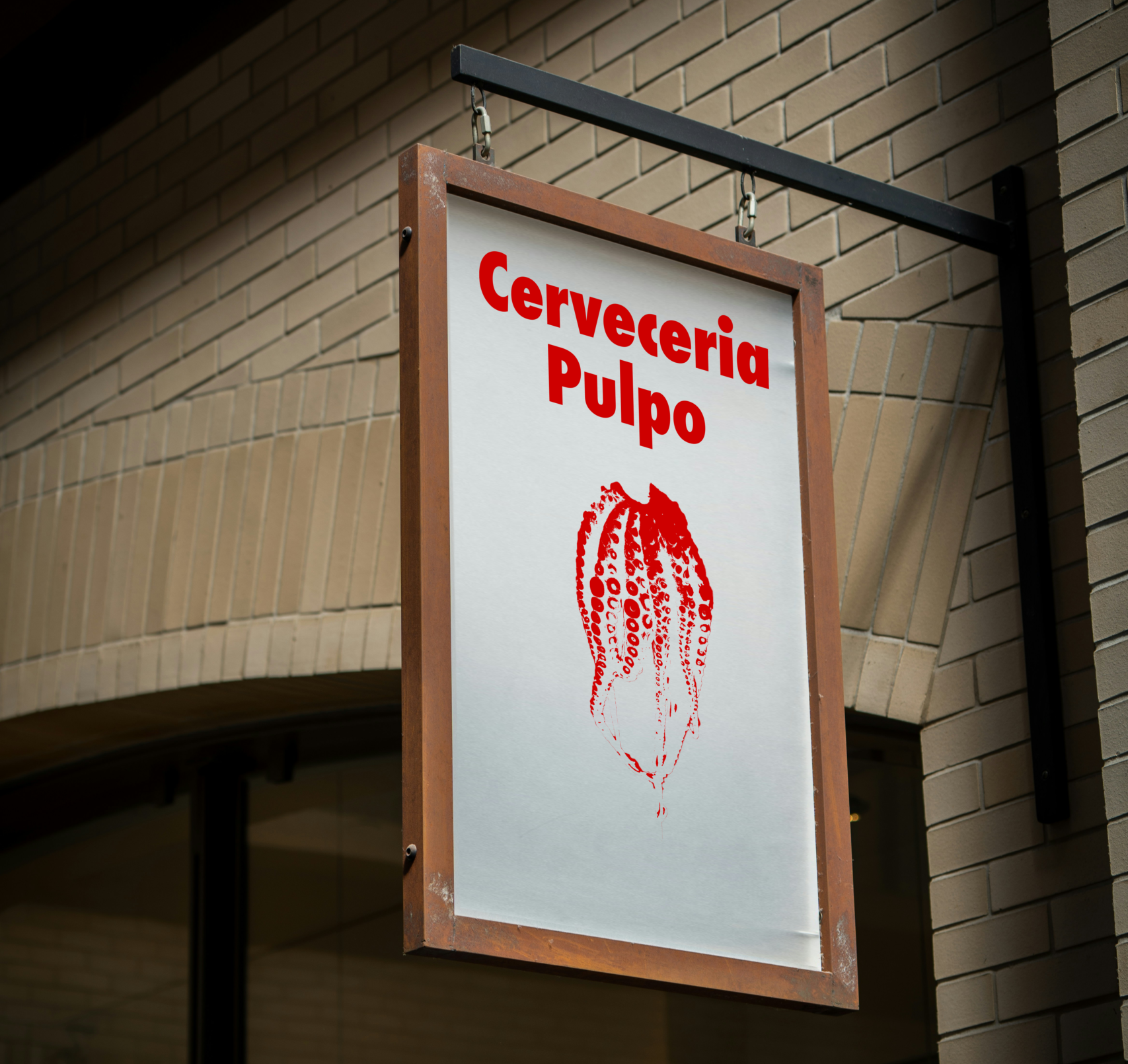
Sign outside the restaurant. Without light and with dark wood, reflecting the traditional feeling of the place.
Napkin design showing everybody who has ever been to a tapas restaurant in Spain, exactly what type of place this is.
Especially the mark below the logo, with the spanish text, signifies that this is a tapas bar.

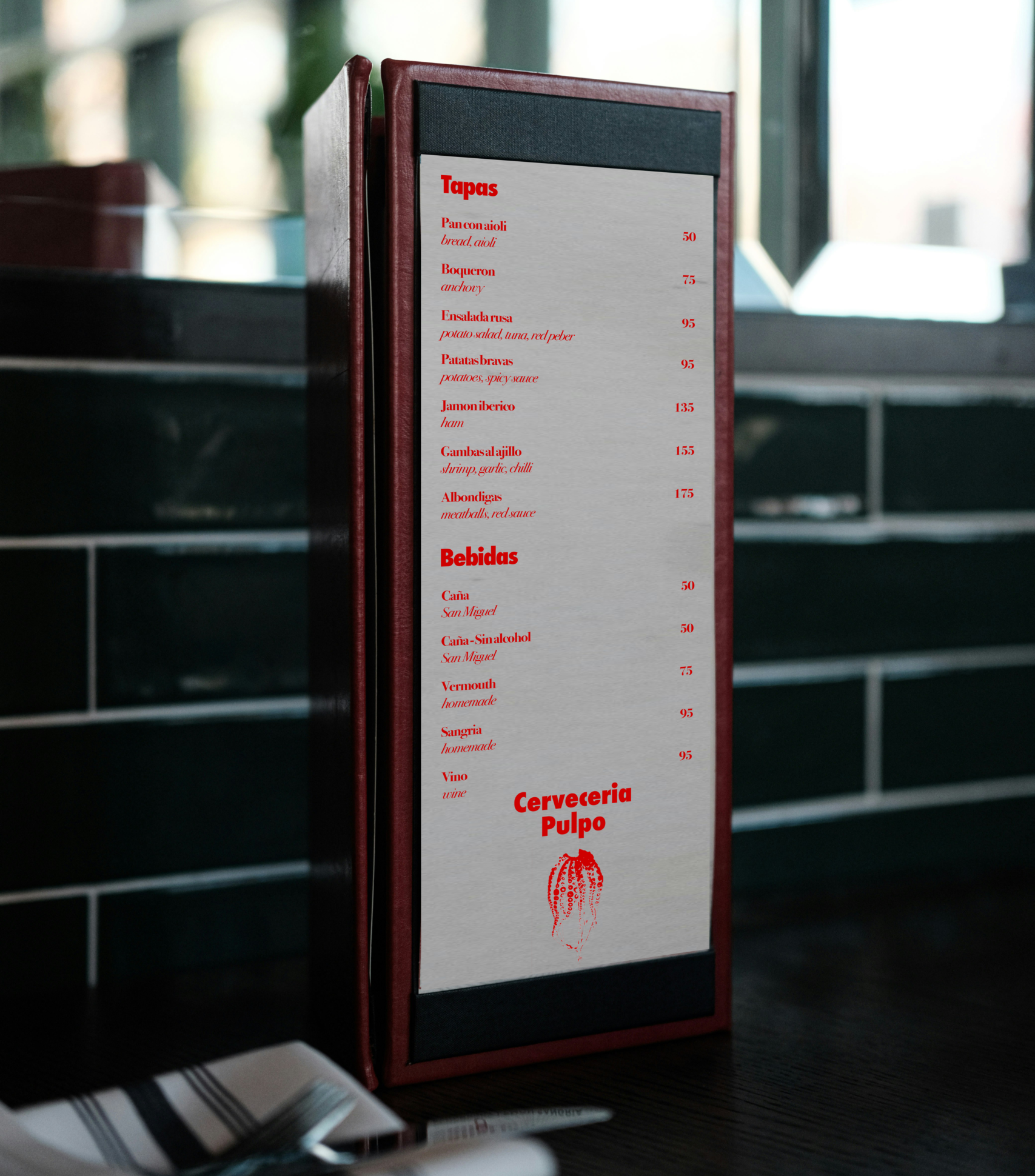
Menu example using simple and functional typography.
T-shirt design for the servers, with a big logo on the back so it is visible, when they are wearing aprons.


Business card which actually is a somewhat crucial part of this restaurant.
It is not possible to book tables online, and each server will have these on them, to hand out to the guests.
INTI
Case study experimenting with the creation of a jewelry brand, with only a single product as the catalyst.